Buy filter-shop.eu ?
We are moving the project
filter-shop.eu .
Are you interested in purchasing the domain
filter-shop.eu ?
domain@kv-gmbh.de · 0541-91531010
Buy filter-shop.eu ?
What is the difference between chlorine and chlorine dioxide?
Chlorine is a chemical element with the symbol Cl and is a strong oxidizing agent commonly used for disinfection purposes. Chlorine dioxide, on the other hand, is a chemical compound with the formula ClO2 and is also used as a disinfectant but is considered to be a more effective and safer alternative to chlorine. Chlorine dioxide is a yellow to reddish gas at room temperature, while chlorine is a greenish-yellow gas. Additionally, chlorine dioxide is less likely to form harmful byproducts compared to chlorine. **
How can one filter or purify water?
One can filter or purify water using various methods such as boiling, using a water filter, adding chlorine or iodine, using UV light, or using a water purification tablet. Boiling water is one of the most effective methods to kill bacteria, viruses, and parasites. Water filters can remove impurities and contaminants from water, making it safe to drink. Adding chlorine or iodine can also kill harmful microorganisms in the water. UV light can be used to disinfect water by destroying the DNA of microorganisms. Lastly, water purification tablets can be used to kill bacteria and viruses in the water. **

Similar search terms for Chlorine
Top-Angebote
Products related to Chlorine:
-
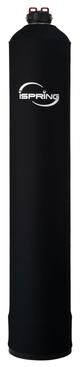
iSpring WF1024 Whole House Water Filter, Reduces PFAS & ChlorineCutting-Edge Water Filtration: Encounter the exceptional iSpring WF1024 whole house water filtration system, integrating the potent combination of premium KDF and coconut shell activated carbon.812,49 $*Shipping: 0,00 $Secure redirect to the provider
-
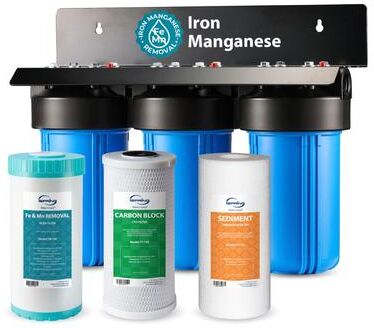
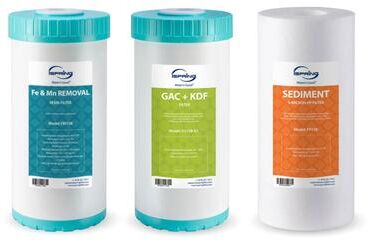
iSpring WGB31BM Whole House Water Filter System, Reduces Iron, Manganese, Chlorine, Sediment, Taste, and Odor, Iron Filter"Reliable Whole House Water Filtration – This 3-stage whole house water filter system includes a 10"" x 4.5"" sediment filter, a carbon block filter, and an iron filter to tackle sediments, chlorine, odors, iron, and manganese across your entire water…"299,29 $*Shipping: 0,00 $Secure redirect to the provider
-
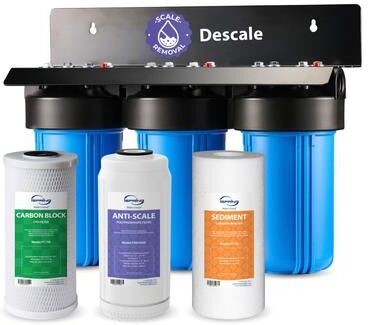
iSpring WGB31B-DS Anti-Scale Whole House Water Filter System, Reduces Chlorine, Odor, & Sediments, Water Descaler & Water FilterScale & Corrosion Protection: Safeguard your plumbing and appliances with our WGB31B-DS whole house water filter system.431,59 $*Shipping: 0,00 $Secure redirect to the provider
-
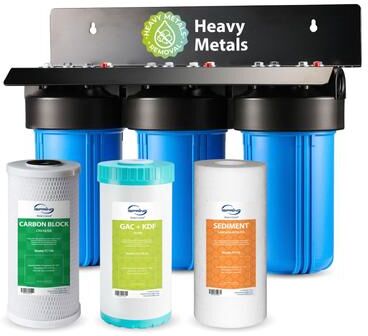
iSpring WGB31B-KS Whole House Water Filter System, Reduces Heavy Metals, Lead, Chlorine, Chloramine, Sediments"Reliable 3-Stage Whole House Water Filtration – This whole house water filter system features a 10"" x 4.5"" sediment filter, a GAC KDF compound filter, and a high-quality carbon block filter to effectively reduce sediments, chlorine, heavy metals,…"305,03 $*Shipping: 0,00 $Secure redirect to the provider

-
Why do two chlorine atoms combine to form a chlorine molecule?
Two chlorine atoms combine to form a chlorine molecule because each chlorine atom has seven electrons in its outer shell, making them highly reactive and likely to form a covalent bond. By sharing one electron each, the two chlorine atoms can achieve a stable electron configuration with a full outer shell of eight electrons, similar to the noble gas configuration. This sharing of electrons allows the two atoms to become more stable and lower their overall energy, forming a strong bond between them. **
-
How can I separate table salt (sodium chloride) into sodium and chlorine?
Table salt (sodium chloride) can be separated into sodium and chlorine through a process called electrolysis. In this process, an electric current is passed through a molten or dissolved salt, causing the sodium ions to move towards the negative electrode (cathode) and the chlorine ions to move towards the positive electrode (anode). As a result, the sodium ions gain electrons and form sodium metal at the cathode, while the chlorine ions lose electrons and form chlorine gas at the anode. This allows for the separation of sodium and chlorine from the sodium chloride compound. **
-
What are chlorine vapors?
Chlorine vapors are the gaseous form of chlorine, a highly reactive and toxic chemical element. These vapors are produced when chlorine gas evaporates into the air. Inhalation of chlorine vapors can cause irritation to the respiratory system, eyes, and skin, and can be harmful or even fatal in high concentrations. Chlorine vapors are commonly used in disinfectants, bleaches, and water treatment processes. **
-
How is chlorine inhaled?
Chlorine can be inhaled when it is released into the air as a gas. This can happen when chlorine-containing products, such as bleach or cleaning agents, are used in poorly ventilated areas. Inhaling chlorine gas can irritate the respiratory system, causing symptoms such as coughing, chest tightness, and difficulty breathing. It is important to always use chlorine products in well-ventilated areas to minimize the risk of inhaling the gas. **
Does chlorine damage hair?
Chlorine can damage hair by stripping away its natural oils, leading to dryness and brittleness. It can also cause the hair cuticle to become rough and frayed, making the hair more prone to breakage and split ends. To minimize damage from chlorine, it is recommended to wet the hair with clean water before swimming, use a swim cap, and rinse the hair thoroughly with fresh water after swimming to remove chlorine residue. Additionally, using a clarifying shampoo or deep conditioning treatment can help restore moisture and repair any damage caused by chlorine exposure. **
Is chlorine cleaner toxic?
Chlorine cleaner can be toxic if ingested or inhaled in large amounts. It is important to use chlorine cleaners in well-ventilated areas and to follow the instructions on the product label to ensure safe usage. Additionally, it is important to keep chlorine cleaners out of reach of children and pets to prevent accidental ingestion. While chlorine can effectively kill bacteria and viruses, it is important to use it with caution and in accordance with safety guidelines. **
Top-Angebote
Products related to Chlorine:
-
iSpring WCF200K Whole House Water Filter, Reduces Chlorine & PFASAdvanced Filter Media: Utilizes premium KDF55 and high quality coconut shell activated carbon to effectively remove chlorine, lead, heavy metals, PFAS, chloramine, radon, herbicides, and more.3329,99 $*Shipping: 0,00 $Secure redirect to the provider
-
iSpring WF1054 Whole House Water Filter, Reduces PFAS & ChlorineSuperior Water Filtration Technology: Harness the potential of the iSpring WF1054 whole house water filtration system, uniting high-quality KDF and coconut shell activated carbon.1273,99 $*Shipping: 0,00 $Secure redirect to the provider
-
iSpring WF1024 Whole House Water Filter, Reduces PFAS & ChlorineCutting-Edge Water Filtration: Encounter the exceptional iSpring WF1024 whole house water filtration system, integrating the potent combination of premium KDF and coconut shell activated carbon.812,49 $*Shipping: 0,00 $Secure redirect to the provider
-
iSpring WGB31BM Whole House Water Filter System, Reduces Iron, Manganese, Chlorine, Sediment, Taste, and Odor, Iron Filter"Reliable Whole House Water Filtration – This 3-stage whole house water filter system includes a 10"" x 4.5"" sediment filter, a carbon block filter, and an iron filter to tackle sediments, chlorine, odors, iron, and manganese across your entire water…"299,29 $*Shipping: 0,00 $Secure redirect to the provider
-
What is the difference between chlorine and chlorine dioxide?
Chlorine is a chemical element with the symbol Cl and is a strong oxidizing agent commonly used for disinfection purposes. Chlorine dioxide, on the other hand, is a chemical compound with the formula ClO2 and is also used as a disinfectant but is considered to be a more effective and safer alternative to chlorine. Chlorine dioxide is a yellow to reddish gas at room temperature, while chlorine is a greenish-yellow gas. Additionally, chlorine dioxide is less likely to form harmful byproducts compared to chlorine. **
-
How can one filter or purify water?
One can filter or purify water using various methods such as boiling, using a water filter, adding chlorine or iodine, using UV light, or using a water purification tablet. Boiling water is one of the most effective methods to kill bacteria, viruses, and parasites. Water filters can remove impurities and contaminants from water, making it safe to drink. Adding chlorine or iodine can also kill harmful microorganisms in the water. UV light can be used to disinfect water by destroying the DNA of microorganisms. Lastly, water purification tablets can be used to kill bacteria and viruses in the water. **
-
Why do two chlorine atoms combine to form a chlorine molecule?
Two chlorine atoms combine to form a chlorine molecule because each chlorine atom has seven electrons in its outer shell, making them highly reactive and likely to form a covalent bond. By sharing one electron each, the two chlorine atoms can achieve a stable electron configuration with a full outer shell of eight electrons, similar to the noble gas configuration. This sharing of electrons allows the two atoms to become more stable and lower their overall energy, forming a strong bond between them. **
-
How can I separate table salt (sodium chloride) into sodium and chlorine?
Table salt (sodium chloride) can be separated into sodium and chlorine through a process called electrolysis. In this process, an electric current is passed through a molten or dissolved salt, causing the sodium ions to move towards the negative electrode (cathode) and the chlorine ions to move towards the positive electrode (anode). As a result, the sodium ions gain electrons and form sodium metal at the cathode, while the chlorine ions lose electrons and form chlorine gas at the anode. This allows for the separation of sodium and chlorine from the sodium chloride compound. **
Similar search terms for Chlorine
-
iSpring WGB31B-DS Anti-Scale Whole House Water Filter System, Reduces Chlorine, Odor, & Sediments, Water Descaler & Water FilterScale & Corrosion Protection: Safeguard your plumbing and appliances with our WGB31B-DS whole house water filter system.431,59 $*Shipping: 0,00 $Secure redirect to the provider
-
iSpring WGB31B-KS Whole House Water Filter System, Reduces Heavy Metals, Lead, Chlorine, Chloramine, Sediments"Reliable 3-Stage Whole House Water Filtration – This whole house water filter system features a 10"" x 4.5"" sediment filter, a GAC KDF compound filter, and a high-quality carbon block filter to effectively reduce sediments, chlorine, heavy metals,…"305,03 $*Shipping: 0,00 $Secure redirect to the provider
-
iSpring F3WGB31BMKS Whole House Water Filter Pack, Reduces Iron, Manganese, Hydrogen Sulfide, Lead, Chlorine, SedimentsReliable Whole House Water Filtration – F3WGB31BMKS whole house water filter replacement pack includes a 10” x 4.5” sediment filter, a GAC and KDF compound filter, and an iron filter to tackle sediments, chlorine, heavy metals, hydrogen sulfide,...143,77 $*Shipping: 0,00 $Secure redirect to the provider
-
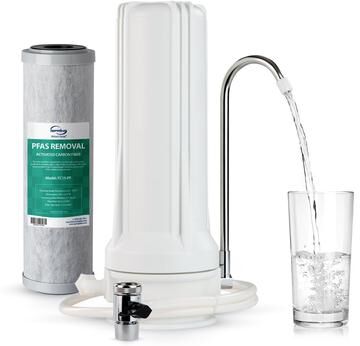
"iSpring CKC1-PF 2.5"" x 10"" Countertop Water Filter, SGS-Tested Filter, Reduces PFAS, Chlorine, Odors - Easy Installation - White"Effective Filtration: Features the FC15-PF carbon fiber cartridge, tested by SGS for verified PFAS reduction. Also engineered to effectively reduce chlorine, chloramine, odors, and sediment, enhancing both the taste and safety of household tap water.89,99 $*Shipping: 0,00 $Secure redirect to the provider
-
What are chlorine vapors?
Chlorine vapors are the gaseous form of chlorine, a highly reactive and toxic chemical element. These vapors are produced when chlorine gas evaporates into the air. Inhalation of chlorine vapors can cause irritation to the respiratory system, eyes, and skin, and can be harmful or even fatal in high concentrations. Chlorine vapors are commonly used in disinfectants, bleaches, and water treatment processes. **
-
How is chlorine inhaled?
Chlorine can be inhaled when it is released into the air as a gas. This can happen when chlorine-containing products, such as bleach or cleaning agents, are used in poorly ventilated areas. Inhaling chlorine gas can irritate the respiratory system, causing symptoms such as coughing, chest tightness, and difficulty breathing. It is important to always use chlorine products in well-ventilated areas to minimize the risk of inhaling the gas. **
-
Does chlorine damage hair?
Chlorine can damage hair by stripping away its natural oils, leading to dryness and brittleness. It can also cause the hair cuticle to become rough and frayed, making the hair more prone to breakage and split ends. To minimize damage from chlorine, it is recommended to wet the hair with clean water before swimming, use a swim cap, and rinse the hair thoroughly with fresh water after swimming to remove chlorine residue. Additionally, using a clarifying shampoo or deep conditioning treatment can help restore moisture and repair any damage caused by chlorine exposure. **
-
Is chlorine cleaner toxic?
Chlorine cleaner can be toxic if ingested or inhaled in large amounts. It is important to use chlorine cleaners in well-ventilated areas and to follow the instructions on the product label to ensure safe usage. Additionally, it is important to keep chlorine cleaners out of reach of children and pets to prevent accidental ingestion. While chlorine can effectively kill bacteria and viruses, it is important to use it with caution and in accordance with safety guidelines. **
* All prices are inclusive of VAT and, if applicable, plus shipping costs. The offer information is based on the details provided by the respective shop and is updated through automated processes. Real-time updates do not occur, so deviations can occur in individual cases. ** Note: Parts of this content were created by AI.